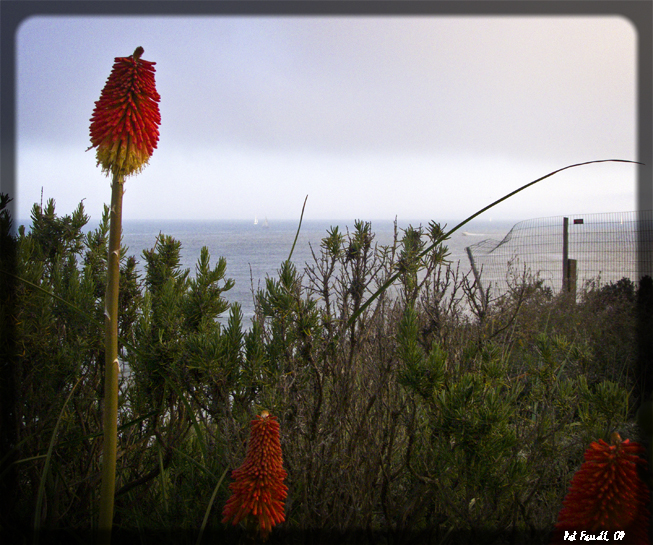
Weekly Photo Challenge: Color

Sunrise or sunset. Some of the best colors ever!

Sunrise over San Francisco

Beginners

Today’s Easter Poem from Education for Justice is by Denise Levertov

So much is in the (poppy) bud!

Beginners
(Dedicated to the memory of Karen
Silkwood and Eliot Gralla)

“From too much love of living,
Hope and desire set free,
Even the weariest river
Winds somewhere to the sea—“

But we have only begun
To love the earth.

We have only begun
To imagine the fullness of life.

How could we tire of hope?
—so much is in bud.

How can desire fail?
—we have only begun

to imagine justice and mercy,
only begun to envision

how it might be
to live as siblings with beast and flower,
not as oppressors.

Surely our river
cannot already be hastening
into the sea of nonbeing?

Surely it cannot
drag, in the silt,
all that is innocent?

Not yet, not yet—
there is too much broken
that must be mended,

too much hurt we have done to each other
that cannot yet be forgiven.

We have only begun to know
the power that is in us if we would join
our solitudes in the communion of struggle.

So much is unfolding that must
complete its gesture,

so much is in bud.

Source: Selected Poems Denise Levertov, by
Denise Levertov, New York: New Directions,
2003. p. 137

Thought Work


sr_spring_flowers_2013_007Today’s Easter poem from Education for Justice is another from John O’Donohue

Thought Work

Off course from the frail music sought by words
And the path that always claims the journey,
In the pursuit of a more oblique rhythm,
Creating mostly its own geography,
The mind is an old crow
Who knows only to gather dead twigs,
Then take them back to the vacancy
Between the branches of the parent tree
And entwine them around the emptiness
With silence and unfailing patience
Until what was fallen, withered and lost
Is now set to fill with dreams as a nest.

Source: Conamara Blues, by John O’Donohue.
New York: Harper Collins, 2001. p. 2

Easter Saturday – Messenger

rafter7_2012_051

Today’s poem from Education for Justice is by Mary Oliver.

Messenger

My work is loving the world.
Here the sunflowers, there the hummingbird –
equal seekers of sweetness.
Here the quickening yeast; there the blue plums.
Here the clam deep in the speckled sand.
Are my boots old? Is my coat torn?
Am I no longer young, and still not half-perfect? Let me
keep my mind on what matters,
which is my work,
which is mostly standing still and learning to be
astonished.
The phoebe, the delphinium.
The sheep in the pasture, and the pasture.
Which is mostly rejoicing, since all the ingredients are here,
which is gratitude, to be given a mind and a heart
And these body-clothes,
A mouth with which to give shouts of joy
To the moth and the wren, to the sleepy dug-up clam,
Telling them all, over and over, how it is
that we live forever.

Source: Thirst, by Mary Oliver. Boston, MA: Beacon Press, 2007.


Easter Friday – At the Edge

Today’s Easter Poem from Education for Justice is by the wonderful Irish poet John O’Donohue.

At the Edge

Sometimes, behind the lines
Of words giving voice to the blue wind
That blows across the amber fields
Of your years, whispering the hungers
Your dignity conceals, and the caves
Of loss opening along shores forgotten
By the ocean, you can of most hear the depth
Of white silence, rising to deny everything.

Source: Conamara Blues, by John O’Donohue.
New York: Harper Collins, 2001. p. 67

. . . words giving voice to the blue wind . . .

Easter Thursday- What to Remember When Waking

Today’s Easter Poem is by one of my favorite poets, David Whyte. I heard him recently at the Religious Education Congress in Southern California. It is wonderful just to hear him recite poetry. What a wonderful experience!

Is it waiting in the fertile sea?

What to Remember When Waking

In that first
hardly noticed
moment
in which you wake,
coming back
to this life
from the other
more secret,
moveable
and frighteningly
honest
world
where everything
began,
there is a small
opening
into the day
which closes
the moment
you begin
your plans.
What you can plan
is too small
for you to live.
What you can live wholeheart-
edly
will make plans
enough for the vitality
To be human
is to become visible,
while carrying
what is hidden
as a gift to others.
To remember
the other world
in
this world
is to live in your
true inheritance.
You are not
a troubled guest
on this earth, you are not
an accident
amidst other accidents,
you were invited
from another and greater
night
than the one
from which
you have just emerged.
Now, looking through
the slanting light
of the morning
window toward
the mountain
presence
of everything
that can be,
what urgency
calls you to your
one love? What shape
waits in the seed
of you to grow
and spread
its branches

against a future sky?

Is it waiting

in the fertile sea?
In the trees
beyond the house?
In the life
you can imagine
for yourself?
In the open
and lovely
white page
on the waiting desk?
Source: House of Belonging, by David Whyte.
Langley, WA: Many RiversPress, 1996. p. 26

Easter Wednesday – What Is Hope?

Today’s Easter poem from Education for Justice is by the Brazilian Theologian Rubem Alves.

dates

What Is Hope?

What is hope?
It is a presentiment that imagination is more real
and reality less real than it looks.
It is a hunch
that the overwhelming brutality of facts
that oppress and repress is not the last word.
It is a suspicion
that reality is more complex
than realism wants us to believe
and that the frontiers of the possible
are not determined by the limits of the actual
and that in a miraculous and unexpected way
life is preparing the creative events
which will open the way to freedom and resurrection….
The two, suffering and hope, live from each other.
Suffering without hope
produces resentment and despair,
hope without suffering
creates illusions, naiveté, and drunkenness….
Let us plant dates
even though those who plant them will never eat them.
We must live by the love of what we will never see.
This is the secret discipline.
It is a refusal to let the creative act
be dissolved in immediate sense experience
and a stubborn commitment to the future of our grandchildren.
Such disciplined love
is what has given prophets, revolutionaries and saints
the courage to die for the future they envisaged.
They make their own bodies
the seed of their highest hope.

Source:Hijos de Maoana (Tomorrow’s Children), Rubem Alves,

Salamanca, Spain: Ediciones Sigueme, 1976.

Easter Tuesday – A Better Resurrection

sr_spring_flowers_2013_059

Today’s Poem from Education for Justice is by Christina Rosetti.

A Better Resurrection

I have no wit, no words, no tears;
   My heart within me like a stone
Is numb’d too much for hopes or fears;
   Look right, look left, I dwell alone;
I lift mine eyes, but dimm’d with grief
   No everlasting hills I see;
My life is in the falling leaf:
   O Jesus, quicken me.

My life is like a faded leaf,
   My harvest dwindled to a husk:
Truly my life is void and brief
   And tedious in the barren dusk;
My life is like a frozen thing,
   No bud nor greenness can I see:
Yet rise it shall—the sap of Spring;
   O Jesus, rise in me.

My life is like a broken bowl,
   A broken bowl that cannot hold
One drop of water for my soul
   Or cordial in the searching cold;
Cast in the fire the perish’d thing;
   Melt and remould it, till it be
A royal cup for Him, my King:
   O Jesus, drink of me.
“A Better Resurrection” is reprinted from Goblin Market and other Poems.
Christina Rossetti. Cambridge: Macmillan, 1862.

Easter Monday – When Death Comes

"I think of each life as a flower"
“I think of each life as a flower”

Today’s Easter poem from Education for Justice is by a favorite poet of many: Mary Oliver.

When Death Comes
When death comes
like the hungry bear in autumn;
when death comes and takes all the bright coins from his purse
to buy me, and snaps the purse shut;
when death comes
like the measle-pox
when death comes
like an iceberg between the shoulder blades,
I want to step through the door full of curiosity, wondering:
what is it going to be like, that cottage of darkness?
And therefore I look upon everything
as a brotherhood and a sisterhood,
and I look upon time as no more than an idea,
and I consider eternity as another possibility,
and I think of each life as a flower, as common
as a field daisy, and as singular,
and each name a comfortable music in the mouth,
tending, as all music does, toward silence,
and each body a lion of courage, and something
precious to the earth.
When it’s over, I want to say all my life
I was a bride married to amazement.
I was the bridegroom, taking the world into my arms.
When it’s over, I don’t want to wonder
if I have made of my life something particular, and real.
I don’t want to find myself sighing and frightened,
or full of argument.
I don’t want to end up simply having visited this world.
Source: New and Selected Poems Vol. 1, by Mary Oliver. Boston, MA:
Beacon Press, 2005 (revised edition)

Happy Easter! The Death of Death

Happy Easter to You!!

I have received so many grateful comments for the poems shared here during the Season of Lent. Easter is such a glorious season. So it would be a shame to stop the poetry now! The site, Education for Justice, has such a treasure trove of resources, so I go to it again for poems that bring us Hope during this Easter Season!

Today’s Lenten poem from Education for Justice is by Scott Cairns. Please continue to enjoy!

May the Blessings and Beauty of Easter by Yours!


The Death of Death
By Scott Cairns

Put fear aside. Now
that He has entered
into death on our behalf,
all who live
no longer die
as men once died.

That ephemeral occasion
has met its utter end.
As seeds cast to the earth, we
will not perish,
but like those seeds
shall rise again—the shroud
of death itself having been
burst to tatters
by love’s immensity.

Love’s Immensity: Mystics on the Endless Life, by Scott Cairns.
Brewster, MA: Paraclete Press, 2007. p. 14