OPreach
Dominican Preaching through Word and Image
Hope

Today’s poet from Education for Justice is a favorite of many, Emily Dickinson.
Hope
Hope is the thing with feathers
That perches in the soul,
And sings the tune—without the words,
And never stops at all,
And sweetest in the gale is heard;
And sore must be the storm
That could abash the little bird
That kept so many warm.
I’ve heard it in the chillest land,
And on the strangest sea;
Yet, never, in extremity,
It asked a crumb of me.Source: The Complete Poems of Emily Dickinson, by Emily Dickenson,
Boston: Little, Brown, and Company, 1924.
Late Ripeness
Today’s Easter poem from Education for Justice is by Czeslaw Milosz.
Late Ripeness
Not soon, as late as the approach of my ninetieth year,
I felt a door opening in me and I entered
the clarity of early morning.One after another my former lives were departing,
like ships, together with their sorrow.And the countries, cities, gardens, the bays of seas
assigned to my brush came closer,
ready now to be described better than they were before.I was not separated from people,
grief and pity joined us.
We forget – I kept saying – that we are all children of the King.For where we come from there is no division
into Yes and No, into is, was, and will be.We were miserable, we used no more than a hundredth part
of the gift we received for our long journey.Moments from yesterday and from centuries ago –
a sword blow, the painting of eyelashes before a mirror
of polished metal, a lethal musket shot, a caravel
staving its hull against a reef – they dwell in us,
waiting for a fulfillment.I knew, always, that I would be a worker in the vineyard,
as are all men and women living at the same time,
whether they are aware of it or not.Source: New and Collected Poems 1931-2001 by Czelaw Milosz.
New York: Ecco, 2003.
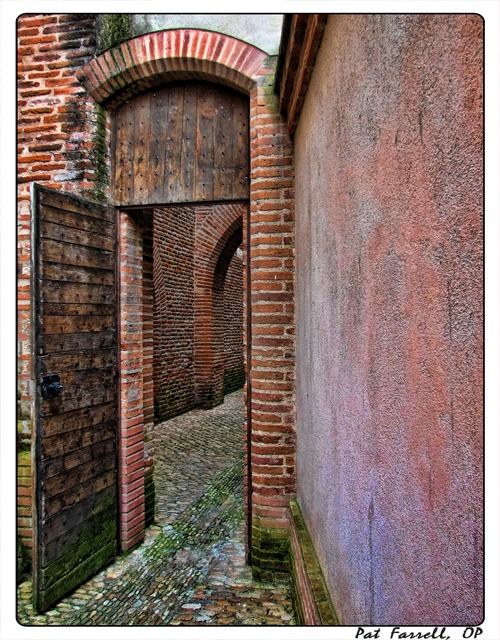
Weekly Photo Challenge: Color
Sunrise or sunset. Some of the best colors ever!

Beginners
Today’s Easter Poem from Education for Justice is by Denise Levertov
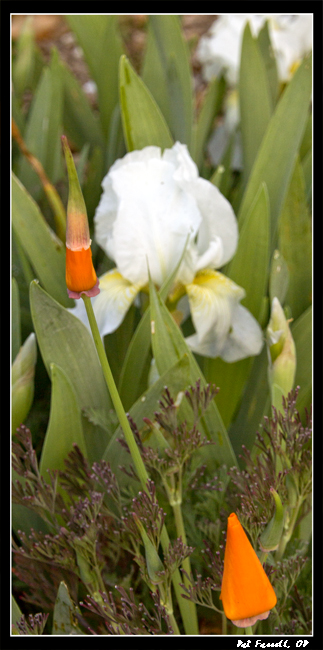
Beginners
(Dedicated to the memory of Karen
Silkwood and Eliot Gralla)
“From too much love of living,
Hope and desire set free,
Even the weariest river
Winds somewhere to the sea—“
But we have only begun
To love the earth.
We have only begun
To imagine the fullness of life.
How could we tire of hope?
—so much is in bud.
How can desire fail?
—we have only begun
to imagine justice and mercy,
only begun to envision
how it might be
to live as siblings with beast and flower,
not as oppressors.
Surely our river
cannot already be hastening
into the sea of nonbeing?
Surely it cannot
drag, in the silt,
all that is innocent?
Not yet, not yet—
there is too much broken
that must be mended,
too much hurt we have done to each other
that cannot yet be forgiven.
We have only begun to know
the power that is in us if we would join
our solitudes in the communion of struggle.
So much is unfolding that must
complete its gesture,
so much is in bud.
Source: Selected Poems Denise Levertov, by
Denise Levertov, New York: New Directions,
2003. p. 137
Thought Work
 Today’s Easter poem from Education for Justice is another from John O’Donohue
Thought Work
Off course from the frail music sought by words
And the path that always claims the journey,
In the pursuit of a more oblique rhythm,
Creating mostly its own geography,
The mind is an old crow
Who knows only to gather dead twigs,
Then take them back to the vacancy
Between the branches of the parent tree
And entwine them around the emptiness
With silence and unfailing patience
Until what was fallen, withered and lost
Is now set to fill with dreams as a nest.Source: Conamara Blues, by John O’Donohue.
New York: Harper Collins, 2001. p. 2
Easter Saturday – Messenger
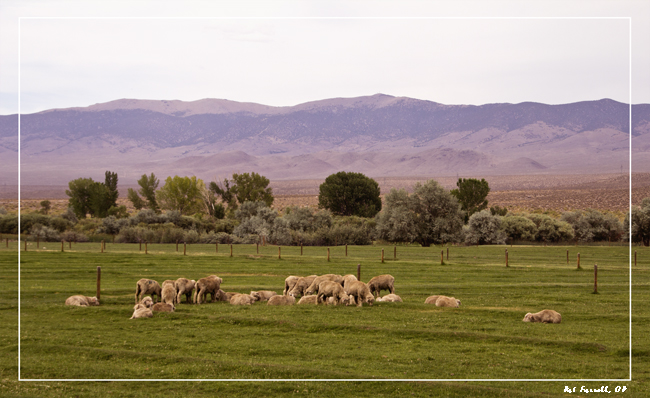
Today’s poem from Education for Justice is by Mary Oliver.
Messenger
My work is loving the world.
Here the sunflowers, there the hummingbird –
equal seekers of sweetness.
Here the quickening yeast; there the blue plums.
Here the clam deep in the speckled sand.
Are my boots old? Is my coat torn?
Am I no longer young, and still not half-perfect? Let me
keep my mind on what matters,
which is my work,
which is mostly standing still and learning to be
astonished.
The phoebe, the delphinium.
The sheep in the pasture, and the pasture.
Which is mostly rejoicing, since all the ingredients are here,
which is gratitude, to be given a mind and a heart
And these body-clothes,
A mouth with which to give shouts of joy
To the moth and the wren, to the sleepy dug-up clam,
Telling them all, over and over, how it is
that we live forever.Source: Thirst, by Mary Oliver. Boston, MA: Beacon Press, 2007.
Easter Friday – At the Edge
Today’s Easter Poem from Education for Justice is by the wonderful Irish poet John O’Donohue.
At the Edge
Sometimes, behind the lines
Of words giving voice to the blue wind
That blows across the amber fields
Of your years, whispering the hungers
Your dignity conceals, and the caves
Of loss opening along shores forgotten
By the ocean, you can of most hear the depth
Of white silence, rising to deny everything.
Source: Conamara Blues, by John O’Donohue.
New York: Harper Collins, 2001. p. 67

Easter Thursday- What to Remember When Waking
Today’s Easter Poem is by one of my favorite poets, David Whyte. I heard him recently at the Religious Education Congress in Southern California. It is wonderful just to hear him recite poetry. What a wonderful experience!

What to Remember When Waking
against a future sky?
Langley, WA: Many RiversPress, 1996. p. 26
Easter Wednesday – What Is Hope?
Today’s Easter poem from Education for Justice is by the Brazilian Theologian Rubem Alves.

What Is Hope?
What is hope?It is a presentiment that imagination is more realand reality less real than it looks.It is a hunchthat the overwhelming brutality of factsthat oppress and repress is not the last word.It is a suspicionthat reality is more complexthan realism wants us to believeand that the frontiers of the possibleare not determined by the limits of the actualand that in a miraculous and unexpected waylife is preparing the creative eventswhich will open the way to freedom and resurrection….The two, suffering and hope, live from each other.Suffering without hopeproduces resentment and despair,hope without sufferingcreates illusions, naiveté, and drunkenness….Let us plant dateseven though those who plant them will never eat them.We must live by the love of what we will never see.This is the secret discipline.It is a refusal to let the creative actbe dissolved in immediate sense experienceand a stubborn commitment to the future of our grandchildren.Such disciplined loveis what has given prophets, revolutionaries and saintsthe courage to die for the future they envisaged.They make their own bodies
the seed of their highest hope.
Source:Hijos de Maoana (Tomorrow’s Children), Rubem Alves,
Salamanca, Spain: Ediciones Sigueme, 1976.
Easter Tuesday – A Better Resurrection

Today’s Poem from Education for Justice is by Christina Rosetti.
A Better Resurrection
I have no wit, no words, no tears;
My heart within me like a stone
Is numb’d too much for hopes or fears;
Look right, look left, I dwell alone;
I lift mine eyes, but dimm’d with grief
No everlasting hills I see;
My life is in the falling leaf:
O Jesus, quicken me.
Christina Rossetti. Cambridge: Macmillan, 1862.

 OPreach