OPreach
Dominican Preaching through Word and Image
Thought Work
 Today’s Easter poem from Education for Justice is another from John O’Donohue
Thought Work
Off course from the frail music sought by words
And the path that always claims the journey,
In the pursuit of a more oblique rhythm,
Creating mostly its own geography,
The mind is an old crow
Who knows only to gather dead twigs,
Then take them back to the vacancy
Between the branches of the parent tree
And entwine them around the emptiness
With silence and unfailing patience
Until what was fallen, withered and lost
Is now set to fill with dreams as a nest.Source: Conamara Blues, by John O’Donohue.
New York: Harper Collins, 2001. p. 2
Easter Saturday – Messenger
Today’s poem from Education for Justice is by Mary Oliver.
Messenger
My work is loving the world.
Here the sunflowers, there the hummingbird –
equal seekers of sweetness.
Here the quickening yeast; there the blue plums.
Here the clam deep in the speckled sand.
Are my boots old? Is my coat torn?
Am I no longer young, and still not half-perfect? Let me
keep my mind on what matters,
which is my work,
which is mostly standing still and learning to be
astonished.
The phoebe, the delphinium.
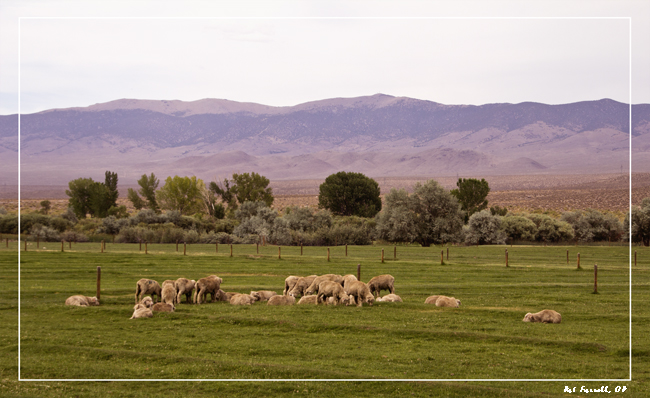
The sheep in the pasture, and the pasture.
Which is mostly rejoicing, since all the ingredients are here,
which is gratitude, to be given a mind and a heart
And these body-clothes,
A mouth with which to give shouts of joy
To the moth and the wren, to the sleepy dug-up clam,
Telling them all, over and over, how it is
that we live forever.Source: Thirst, by Mary Oliver. Boston, MA: Beacon Press, 2007.
Easter Friday – At the Edge
Today’s Easter Poem from Education for Justice is by the wonderful Irish poet John O’Donohue.
At the Edge
Sometimes, behind the lines
Of words giving voice to the blue wind
That blows across the amber fields
Of your years, whispering the hungers
Your dignity conceals, and the caves
Of loss opening along shores forgotten
By the ocean, you can of most hear the depth
Of white silence, rising to deny everything.
Source: Conamara Blues, by John O’Donohue.
New York: Harper Collins, 2001. p. 67

Easter Thursday- What to Remember When Waking
Today’s Easter Poem is by one of my favorite poets, David Whyte. I heard him recently at the Religious Education Congress in Southern California. It is wonderful just to hear him recite poetry. What a wonderful experience!

What to Remember When Waking
against a future sky?
Langley, WA: Many RiversPress, 1996. p. 26
Easter Wednesday – What Is Hope?
Today’s Easter poem from Education for Justice is by the Brazilian Theologian Rubem Alves.

What Is Hope?
What is hope?It is a presentiment that imagination is more realand reality less real than it looks.It is a hunchthat the overwhelming brutality of factsthat oppress and repress is not the last word.It is a suspicionthat reality is more complexthan realism wants us to believeand that the frontiers of the possibleare not determined by the limits of the actualand that in a miraculous and unexpected waylife is preparing the creative eventswhich will open the way to freedom and resurrection….The two, suffering and hope, live from each other.Suffering without hopeproduces resentment and despair,hope without sufferingcreates illusions, naiveté, and drunkenness….Let us plant dateseven though those who plant them will never eat them.We must live by the love of what we will never see.This is the secret discipline.It is a refusal to let the creative actbe dissolved in immediate sense experienceand a stubborn commitment to the future of our grandchildren.Such disciplined loveis what has given prophets, revolutionaries and saintsthe courage to die for the future they envisaged.They make their own bodies
the seed of their highest hope.
Source:Hijos de Maoana (Tomorrow’s Children), Rubem Alves,
Salamanca, Spain: Ediciones Sigueme, 1976.
Easter Tuesday – A Better Resurrection

Today’s Poem from Education for Justice is by Christina Rosetti.
A Better Resurrection
I have no wit, no words, no tears;
My heart within me like a stone
Is numb’d too much for hopes or fears;
Look right, look left, I dwell alone;
I lift mine eyes, but dimm’d with grief
No everlasting hills I see;
My life is in the falling leaf:
O Jesus, quicken me.
Christina Rossetti. Cambridge: Macmillan, 1862.
Easter Monday – When Death Comes

Today’s Easter poem from Education for Justice is by a favorite poet of many: Mary Oliver.
When Death ComesWhen death comeslike the hungry bear in autumn;when death comes and takes all the bright coins from his purseto buy me, and snaps the purse shut;when death comeslike the measle-poxwhen death comeslike an iceberg between the shoulder blades,I want to step through the door full of curiosity, wondering:what is it going to be like, that cottage of darkness?And therefore I look upon everythingas a brotherhood and a sisterhood,and I look upon time as no more than an idea,and I consider eternity as another possibility,and I think of each life as a flower, as commonas a field daisy, and as singular,and each name a comfortable music in the mouth,tending, as all music does, toward silence,and each body a lion of courage, and somethingprecious to the earth.When it’s over, I want to say all my lifeI was a bride married to amazement.I was the bridegroom, taking the world into my arms.When it’s over, I don’t want to wonderif I have made of my life something particular, and real.I don’t want to find myself sighing and frightened,or full of argument.I don’t want to end up simply having visited this world.Source: New and Selected Poems Vol. 1, by Mary Oliver. Boston, MA:
Beacon Press, 2005 (revised edition)
Happy Easter! The Death of Death
Happy Easter to You!!
I have received so many grateful comments for the poems shared here during the Season of Lent. Easter is such a glorious season. So it would be a shame to stop the poetry now! The site, Education for Justice, has such a treasure trove of resources, so I go to it again for poems that bring us Hope during this Easter Season!
Today’s Lenten poem from Education for Justice is by Scott Cairns. Please continue to enjoy!

The Death of DeathBy Scott CairnsPut fear aside. Nowthat He has enteredinto death on our behalf,all who liveno longer dieas men once died.That ephemeral occasionhas met its utter end.As seeds cast to the earth, wewill not perish,but like those seedsshall rise again—the shroudof death itself having beenburst to tattersby love’s immensity.Love’s Immensity: Mystics on the Endless Life, by Scott Cairns.
Brewster, MA: Paraclete Press, 2007. p. 14
The Magdalen, a Garden and This
 Today’s Lenten poem from Education for Justice is by Kathleen O’Toole.
The Magdalen, a Garden and This
She who is known by myth and association
as sinful, penitent, voluptuous perhaps…
but faithful to the last and then beyond.A disciple for sure, confused often with Mary,
sister of Lazarus, or the woman caught
in adultery, or she who angered the menby anointing Jesus with expensive oils.
She was the one from whom he cast out seven
demons—she’s named in that account.Strip all else away and we know only
that she was grateful, that she found her way
to the cross, and that she returnedto the tomb, to the garden nearby, and there,
weeping at her loss, was recognized,
became known in the tender invocationof her name. Mary: breathed by one
whom she mistook for the gardener, he
who in an instant brought her back to herself—gave her in two syllables a life beloved,
gave me the only sure thing I’ll believe
of heaven, that if it be, it will consistin this: the one unmistakable
rendering of your name.Source: “The Magdalen, a Garden and This” by Kathleen O’Toole from America
Magazine Vol. 186 No. 11 (4/1/2002).
Simon Peter
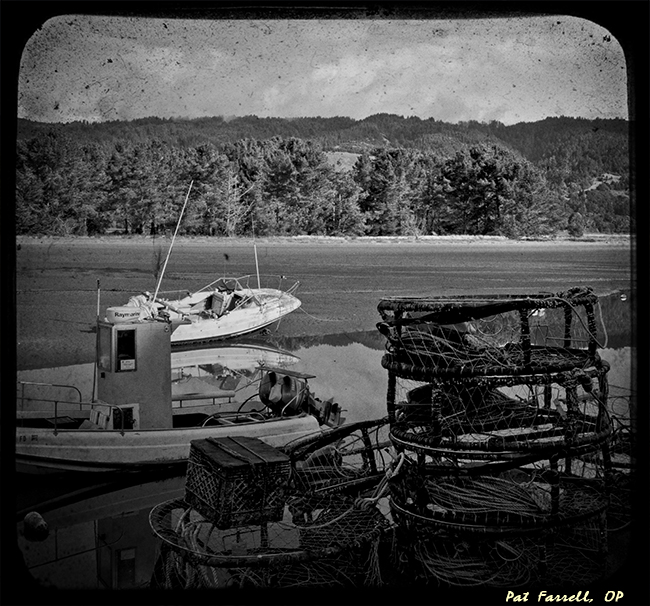 The Apostle Peter, the fisherman, plays an important role in the drama of Good Friday. Today’s poem from Education for Justice is entitled “Simon Peter” by John Porch.
Simon Peter
There are three things which are too wonderful for me,
Yes, four which I do not understand.
The way of an eagle in the air,
The way of a serpent on a rock,
The way of a ship in the heart of the sea,
And the way of a man with a maid
—Prov. 30:18, 19I
Contagious as a yawn, denial poured
over me like a soft fall fog, a girl
on a carnation strewn parade float, waving
at everyone and no one, boring and bored
There actually was a robed commotion parading.
I turned and turned away and turned. A swirl
of wind pulled back my hood, a fire of coal
brightened my face, and those around me whispered:
You’re one of them, aren’t you? You smell like fish.
And wine, someone else joked. That’s brutal. That’s cold,
I said, and then they knew me by my speech.
They let me stay and we told jokes like fishermen
and houseboys. We gossiped till the cock crowed,
his head a small volcano raised to mock stone.II
Who could believe a woman’s word, perfumed
in death? I did. I ran and was outrun
before I reached the empty tomb. I stepped
inside an empty shining shell of a room,
sans pearl. I walked back home alone and wept
again. At dinner. His face shone like the sun.
I went out into the night. I was a sailor
and my father’s nets were calling. It was high tide,
I brought the others. Nothing, the emptiness
of business, the hypnotic waves of failure.
But a voice from shore, a familiar fire, and the nets
were full. I wouldn’t be outswum, denied
this time. The coal-fire before me, the netted fish
behind. I’m carried where I will not wish.Source: “Simon Peter” by John Poch from America Magazine, Vol. 188 No. 7
(3/10/2003).

 OPreach