OPreach
Dominican Preaching through Word and Image
The Heart of Compassion
 Today’s Lenten poem from Education for Justice is by Joyce Rupp.
The Heart of Compassion
Compassionate God,
your generous presence
is always attuned to hurting ones.
Your listening ear is bent
toward the cries of the wounded
Your heart of love
fills with tears for the suffering.Turn my inward eye to see
that I am not alone.
I am a part of all of life.
Each one’s joy and sorrow
is my joy and sorrow,
and mine is theirs.
May I draw strength
from this inner communion.
May it daily recommit me
to be a compassionate presence
for all who struggle with life’s pain.Source: “The Heart of Compassion” from Your Sorrow is My Sorrow, by Joyce
Rupp. New York: The Crossroads Publishing Co., 1999.
The Peace of Wild Things
 Today’s Lenten poem from Education for Justice is by Wendell Berry.
The Peace of Wild Things
When despair for the world grows in me
and I wake in the night at the least sound
in fear of what my life and my children’s lives may be,
I go and lie down where the wood drake
rests in his beauty on the water, and the great heron feeds.
I come into the peace of wild things
who do not tax their lives with forethought
of grief. I come into the presence of still water.
And I feel above me the day-blind stars
waiting with their light. For a time
I rest in the grace of the world, and am free.Source: “The Peace of Wild Things” from The Selected Poems of Wendell Berry
by Wendell Berry. Washington, DC: Counterpoint, 1998.
The Bright Field
 Today’s Lenten poem from Education for Justice is by R. S. Thomas.
The Bright Field
I have seen the sun break through
to illuminate a small field
for a while, and gone my way
and forgotten it. But that was the pearl
of great price, the one field that had
treasure in it. I realize now
that I must give all that I have
to possess it. Life is not hurrying
on to a receeding future, nor hankering after
an imagined past. It is the turning
aside like Moses to the miracle
of the lit bush, to a brightness
that seemed as transitory as your youth
once, but is the eternity that awaits you.Source: “The Bright Field” from Collected Poems 1945-1990, by R.S. Thomas.
London: Phoenix Press, 2002.
Open Your Eyes
 Today’s Lenten poem from Education for Justice is by Richard Guy Miller.
Open Your Eyes
We never really die.
We just open our eyes.When they have seen
Their last limitation,
We turn and weep,
Or we awake from our dream,
Open our eyes and know…We never really die.
We just open our eyes.When we have seen
Our last limitation,
We turn and weep,
Or we awake from our dream,
Open our eyes and know…We never really lived.
We just closed our eyes.Source: “Open Your Eyes” by Richard Guy Miller. Meditate with Poetry, 2003.
http://www.explorefaith.org/oasis/poetry/openEyes.html.
Weekly Photo Challenge: Lost in the Details
I am convinced that balance is one of the most needed qualities in life. Balance lives somewhere between “Lost in the Details” and “The Devil is In the Details.” 
Think Not How Far
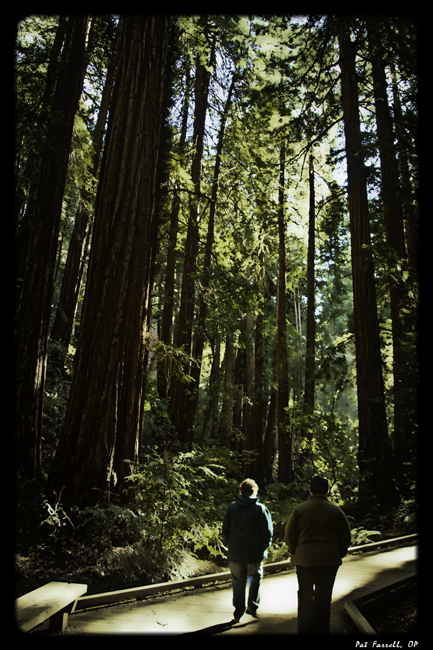 Today’s Lenten poem from Education for Justice is by Harold Macdonald.
Think Not How Far
Think not how far we have to go,
how far we’ve come; it saps the strength,
melts the will. It’s better not to know
the breadth and height and length
of all that’s still ahead.
Who wants to learn one’s end?
What will be, what would have been – weigh like lead.
Past offenses change not, cannot mend.
Better to proceed by little steps
within your range; no sweat, regret, no strain;
blanking out dramatic heights and depths
the thought of chasms, rough terrain.
Time then to see God’s downward bending
to share the journey and the ending.Source: “Think Not How Far” from Poems from the Eighth Decade, by Harold
Macdonald. 2004.
Alone
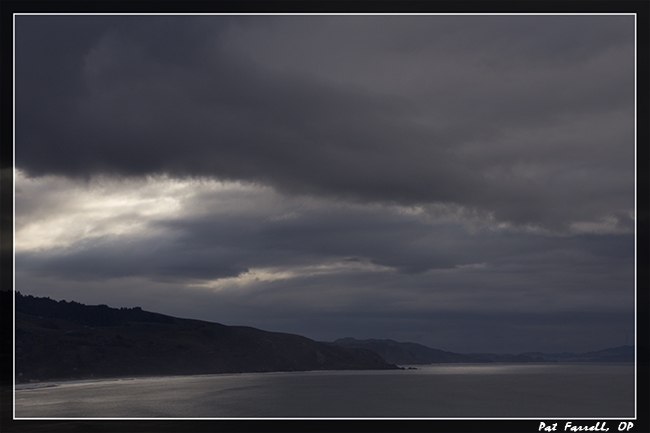 Today’s Lenten poem from Education for Justice is by Maya Angelou.
Alone
Lying, thinking
Last night
How to find my soul a home
Where water is not thirsty
And bread loaf is not stone
I came up with one thing
And I don’t believe I’m wrong
That nobody,
But nobody
Can make it out here alone.Alone, all alone
Nobody, but nobody
Can make it out here alone.There are some millionaires
With money they can’t use
Their wives run round like banshees
Their children sing the blues
They’ve got expensive doctors
To cure their hearts of stone.
But nobody
No, nobody
Can make it out here alone.Alone, all alone
Nobody, but nobody
Can make it out here alone.Now if you listen closely
I’ll tell you what I know
Storm clouds are gathering
The wind is gonna blow
The race of man is suffering
And I can hear the moan,
‘Cause nobody,
But nobody
Can make it out here alone.Alone, all alone
Nobody, but nobody
Can make it out here alone.Source: “Alone” from Oh Pray My Wings Are Gonna Fit Me Well, by Maya
Angelou. New York: Random House, Inc., 1975.
In Praise of Self-Deprecation
 Today’s Lenten poem from Education for Justice is by Wislawa Szymborska.
In Praise of Self-Deprecation
The buzzard has nothing to fault himself with.
Scruples are alien to the black panther.
Piranhas do not doubt the rightness of their actions.
The rattlesnake approves of himself without reservations.
The self-critical jackal does not exist.
The locust, alligator, trichina, horsefly
live as they live and are glad of it.
The killer whale’s heart weighs one hundred kilos
but in other respects it is light.
There is nothing more animal-like
than a clear conscience
on the third planet of the Sun.
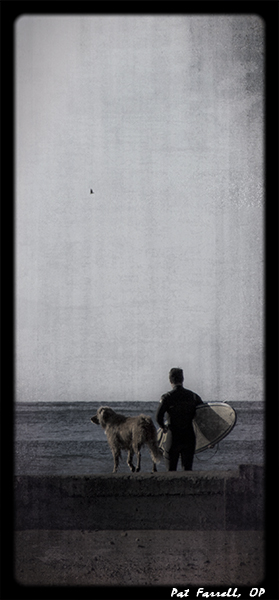
Weekly Photo Challenge: Forward
There are far, far better things ahead than any we leave behind.
– C. S. Lewis
The Rowing Endeth
 Today’s Lenten poem from Education for Justice is by Anne Sexton.
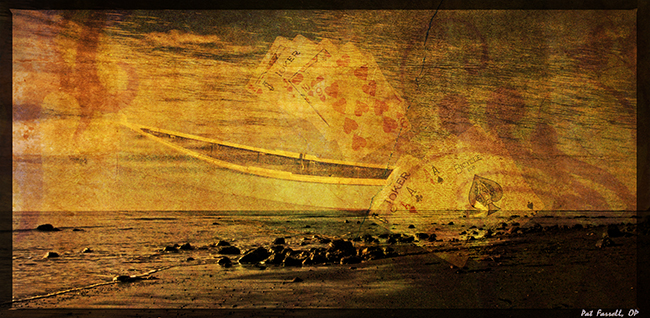
The Rowing Endeth
I’m mooring my rowboat
at the dock of the island called God.
This dock is made in the shape of a fish
and there are many boats moored
at many different docks.
“It’s okay,” I say to myself,
with blisters that broke and healed
and broke and headed—saving
themselves over and over.
And salt sticking to my face and arms like
a glue-skin pocked with grains of tapioca.
I empty myself from my wooden boat
and onto the flesh of The Island.“On with it!” He says and thus
we squat on the rocks by the sea
and play—can it be true—a
game of poker.
He calls me.
I win because I hold a royal straight flush.
He wins because He holds five aces.A wild card had been announced
but I had not beard it
being in such a state of awe
when He took out the cards and dealt.
As he plunks down His five aces
and I sit grinning at my royal flush,
He starts to laugh,
the laughter rolling like a hoop out of His mouth
and into mine,
and such laughter that He doubles right over me
laughing a Rejoice Chores at our two triumphs.
Then I laugh, the fishy dock laughs
the sea laughs. The Island laughs.
The Absurd laughs.Dearest dealer,
I with my royal straight flush,
love yon so for your wild card,
that untamable, eternal, gut-driven ha-ha
and lucky love.Source: “The Rowing Endeth” from The Awful Rowing Toward God by Anne
Sexton. New York: Houghton Mifflin Company, 1975.

 OPreach