OPreach
Dominican Preaching through Word and Image
Weekly Photo Challenge: Lost in the Details
I am convinced that balance is one of the most needed qualities in life. Balance lives somewhere between “Lost in the Details” and “The Devil is In the Details.” 
Think Not How Far
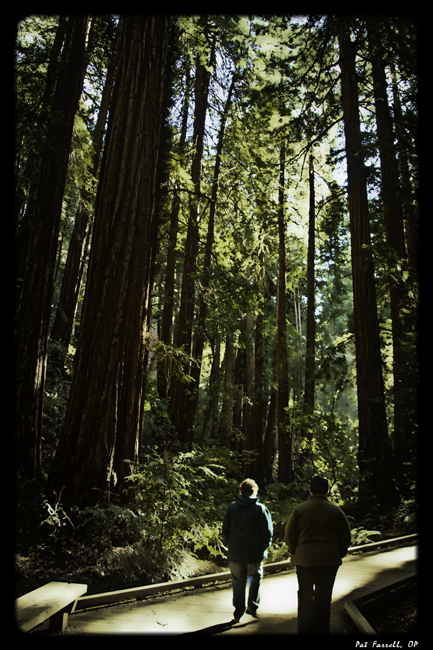 Today’s Lenten poem from Education for Justice is by Harold Macdonald.
Think Not How Far
Think not how far we have to go,
how far we’ve come; it saps the strength,
melts the will. It’s better not to know
the breadth and height and length
of all that’s still ahead.
Who wants to learn one’s end?
What will be, what would have been – weigh like lead.
Past offenses change not, cannot mend.
Better to proceed by little steps
within your range; no sweat, regret, no strain;
blanking out dramatic heights and depths
the thought of chasms, rough terrain.
Time then to see God’s downward bending
to share the journey and the ending.Source: “Think Not How Far” from Poems from the Eighth Decade, by Harold
Macdonald. 2004.
Alone
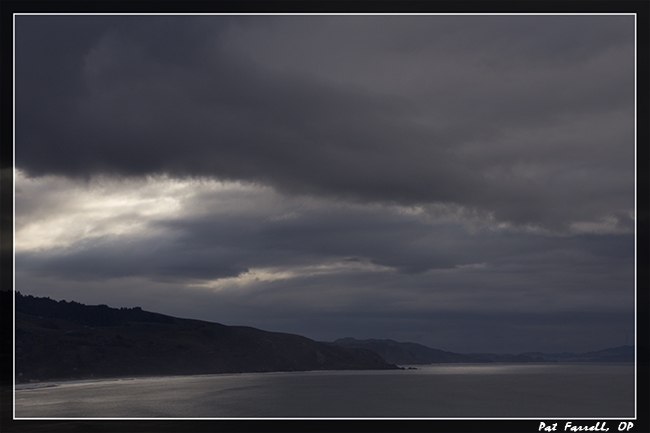 Today’s Lenten poem from Education for Justice is by Maya Angelou.
Alone
Lying, thinking
Last night
How to find my soul a home
Where water is not thirsty
And bread loaf is not stone
I came up with one thing
And I don’t believe I’m wrong
That nobody,
But nobody
Can make it out here alone.Alone, all alone
Nobody, but nobody
Can make it out here alone.There are some millionaires
With money they can’t use
Their wives run round like banshees
Their children sing the blues
They’ve got expensive doctors
To cure their hearts of stone.
But nobody
No, nobody
Can make it out here alone.Alone, all alone
Nobody, but nobody
Can make it out here alone.Now if you listen closely
I’ll tell you what I know
Storm clouds are gathering
The wind is gonna blow
The race of man is suffering
And I can hear the moan,
‘Cause nobody,
But nobody
Can make it out here alone.Alone, all alone
Nobody, but nobody
Can make it out here alone.Source: “Alone” from Oh Pray My Wings Are Gonna Fit Me Well, by Maya
Angelou. New York: Random House, Inc., 1975.
In Praise of Self-Deprecation
 Today’s Lenten poem from Education for Justice is by Wislawa Szymborska.
In Praise of Self-Deprecation
The buzzard has nothing to fault himself with.
Scruples are alien to the black panther.
Piranhas do not doubt the rightness of their actions.
The rattlesnake approves of himself without reservations.
The self-critical jackal does not exist.
The locust, alligator, trichina, horsefly
live as they live and are glad of it.
The killer whale’s heart weighs one hundred kilos
but in other respects it is light.
There is nothing more animal-like
than a clear conscience
on the third planet of the Sun.
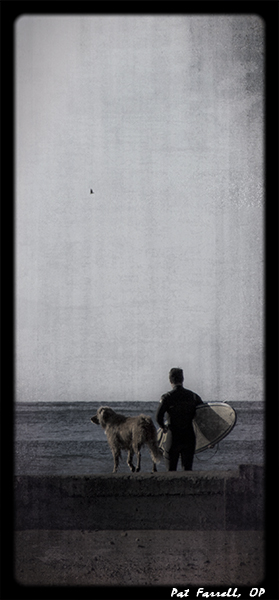
Weekly Photo Challenge: Forward
There are far, far better things ahead than any we leave behind.
– C. S. Lewis
The Rowing Endeth
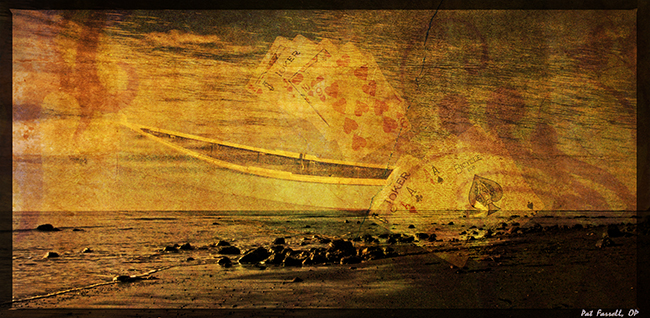 Today’s Lenten poem from Education for Justice is by Anne Sexton.
The Rowing Endeth
I’m mooring my rowboat
at the dock of the island called God.
This dock is made in the shape of a fish
and there are many boats moored
at many different docks.
“It’s okay,” I say to myself,
with blisters that broke and healed
and broke and headed—saving
themselves over and over.
And salt sticking to my face and arms like
a glue-skin pocked with grains of tapioca.
I empty myself from my wooden boat
and onto the flesh of The Island.“On with it!” He says and thus
we squat on the rocks by the sea
and play—can it be true—a
game of poker.
He calls me.
I win because I hold a royal straight flush.
He wins because He holds five aces.A wild card had been announced
but I had not beard it
being in such a state of awe
when He took out the cards and dealt.
As he plunks down His five aces
and I sit grinning at my royal flush,
He starts to laugh,
the laughter rolling like a hoop out of His mouth
and into mine,
and such laughter that He doubles right over me
laughing a Rejoice Chores at our two triumphs.
Then I laugh, the fishy dock laughs
the sea laughs. The Island laughs.
The Absurd laughs.Dearest dealer,
I with my royal straight flush,
love yon so for your wild card,
that untamable, eternal, gut-driven ha-ha
and lucky love.Source: “The Rowing Endeth” from The Awful Rowing Toward God by Anne
Sexton. New York: Houghton Mifflin Company, 1975.
To Live in the Mercy of God
 Today’s Lenten poem from Education for Justice is by Denise Levertov.
To Live in the Mercy of God
To lie back under the tallest
oldest trees. How far the stems
rise, rise
before ribs of shelter
open!
To live in the mercy of God. The complete
sentence too adequate, has no give.
Awe, not comfort. Stone, elbows of
stony wood beneath lenient
moss bed.
And awe suddenly
passing beyond itself. Becomes
a form of comfort.
Becomes the steady
air you glide on, arms
stretched like the wings of flying foxes.
To hear the multiple silence
of trees, the rainy
forest depths of their listening.
To float, upheld,
as salt water
would hold you,
once you dared.
To live in the mercy of God.
To feel vibrate the enraptured
waterfall flinging itself
unabating down and down
to clenched fists of rock.
Swiftness of plunge,
hour after year after century,
O or Ah
uninterrupted, voice
many-stranded.
To breathe
spray. The smoke of it.
Arcs
of steelwhite foam, glissades
of fugitive jade barely perceptible. Such passion—
rage or joy?
Thus, not mild, not temperate,
God’s love for the world. Vast
flood of mercy
flung on resistance.
Source: “To Live in the Mercy of God” from Sands from the Well, by Denise
Levertov. New York: New Directions, 1996.
Prayer
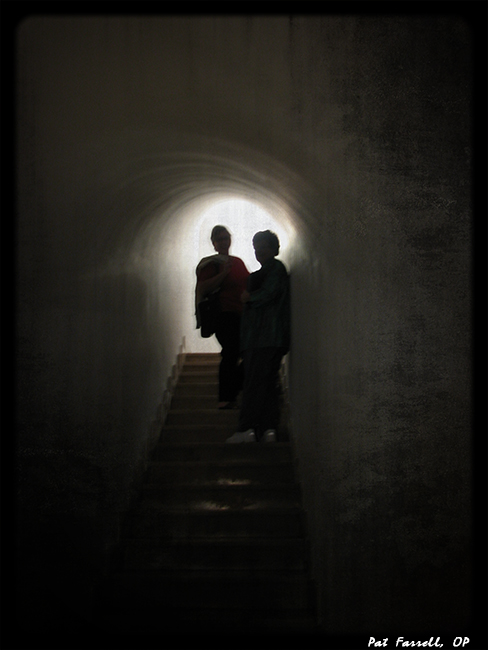
Today’s Lenten poem from Education for Justice is by Jessica Powers.
Prayer
Prayer is the trap-door out of sin.
Prayer is a mystic entering in
to secret places full of light.
It is a passage through the night.
Heaven is reached, the blessed say,
by prayer and by no other way.
One may kneel down and make a plea
with words from book or breviary,
or one may enter in and find
a home-made message in the mind.
But true prayer travels further still,
to seek God’s presence and God’s will.
To pray can be to push a door
and snatch some crumbs of evermore,
or (likelier by far) to wait,
head bowed, before a fastened gate,
helpless and miserable and dumb,
yet hopeful that the Lord will come.
Here is the prayer of grace and good
most proper to our creaturehood.
God’s window shows his humble one
more to the likeness of His Son.
He sees, though thought and senses stray,
the will is resolute to stay
and feed, in weathers sweet or grim,
on any word that speaks of Him.
He beams on the humility
that keeps it peace in misery
and, save for glimmerings, never knows
how beautiful with light it grows.
He smiles on faith that seems to know
it has no other place to go.
But some day, hidden by His will,
if this meek child is waiting still,
God will take out His mercy-key
and open up felicity,
where saltiest tears are given right
to seas where sapphire marries light,
where by each woe the soul can span
new orbits for the utter man,
where even the flesh, so seldom prized,
would blind the less than divinized.Source: “Prayer” from The Selected Poetry of Jessica Powers, edited by
Regina Siegfried, ASC, and Robert F. Morneau. Kansas City, MO: Sheed &
Ward, 1989.
What I Pray For
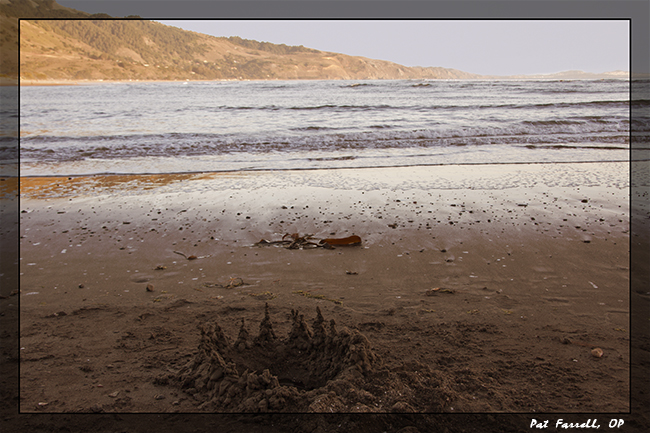
Today’s Lenten poem from Education for Justice is by Dennis O’Donnell
What I Pray For
Sacks of rocks
I have gathered from the beach,
some of which I used to toss
my own I Ching, stones representing
fire, water, wind, and the rest,
some of them with strange,
man-like markings, like circles,
probably formed by little pools of sea water,
dried by the sun, leaving behind
a round stain of salt.Stacks of poems, sacks of rocks,
milk crates full of books
full of baloney:
I can’t let them go, not yet,
but I lie in bed and plead with God
to empty out my past, all of it,
at least all of the bad,
set me free, flush out
all the shame and rage and heartache,
but please, not the finger-paints,
not baseball and my best friends.Deal, He says,
but all the rocks must go.
No tarot cards, and no metaphysical bull.
Fine, I say.I have a look at my bookcase.
I see Rumi, Suzuki, Lao Tzu,
and two Bibles. So:
who will throw the first stone?Source: “What I Pray For” by Dennis O’Donnell from America Magazine, Vol.
190 No. 6 (2/23/2004).
The Uses of Sorrow
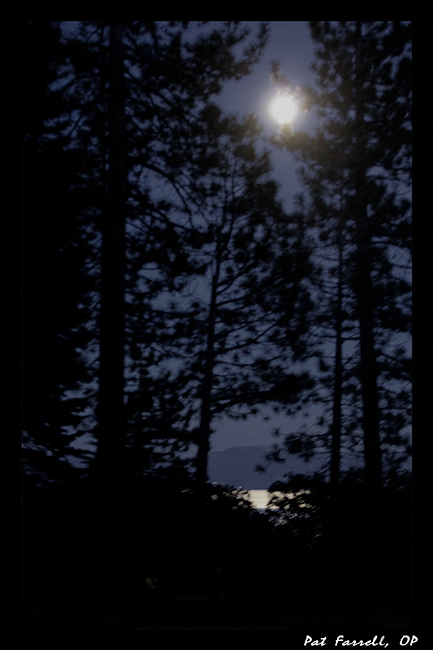 Today’s Lenten poem from Education for Justice is by Mary Oliver, a favorite of many.
The Uses of Sorrow
Someone I loved once gave me
a box full of darkness.It took me years to understand
that this, too, was a gift.Source: “The Uses of Sorrow” from Thirst, by Mary Oliver. Boston: Beacon
Press, 2006.

 OPreach